
Living with more than one chronic condition often means more than one prescriber, more than one pharmacy visit, and a medicine cabinet that grows a little every year. Each medication may make sense on its own. The question that's easy to miss is how they all fit together, with each other, with your other conditions, and with what you eat and drink.
This guide covers the kinds of interactions worth knowing about, a few common examples, and how to keep track of it all without becoming your own pharmacist.
Four kinds of interactions
Medication with medication
Two medicines can add to each other's effects, cancel each other out, or change how quickly your body clears one of them. Over-the-counter medicines and supplements count too, and they're the ones most often left off the list.
Medication with a condition
A medicine that's right for one condition can make another harder to manage. This is the kind most likely to slip through when different specialists treat different conditions.
Medication with food or drink
Some foods and drinks change how a medicine is absorbed or broken down. Others work against what the medicine is trying to do.
Medication with an allergy
Allergies to a medicine, or to an ingredient in it, need to be checked every time something new is added.
Common examples
These are well-known examples, not a complete list, and not every person on these medicines is affected. They're the kind of thing worth asking about.
- Pain relievers and blood pressure: NSAIDs such as ibuprofen and naproxen can raise blood pressure, cause fluid retention and affect the kidneys, which matters with high blood pressure, heart failure or kidney disease.
- Decongestants and blood pressure: cold medicines containing pseudoephedrine or phenylephrine can raise blood pressure and heart rate.
- Migraine medicines and the heart: triptans such as sumatriptan narrow blood vessels, so they're used with caution, or not at all, in some people with heart disease or uncontrolled high blood pressure.
- Grapefruit and some statins: grapefruit can raise blood levels of certain cholesterol medicines, like simvastatin, and of some other medications.
- Vitamin K and warfarin: leafy greens are healthy, but big changes in how much you eat can change how well warfarin works. Consistency is what matters.
- Alcohol and many medicines: alcohol can add to drowsiness from sleep, pain and anxiety medicines, and interacts badly with some antibiotics.
How to stay on top of it
- Keep one complete list. Every prescription, over-the-counter medicine, vitamin and supplement, with the dose and when you take it.
- Show it to every prescriber. Especially when something new is started, and at every specialist visit.
- Use one pharmacy if you can. Pharmacists check new prescriptions against what's already on file.
- Ask about food and drink. "Is there anything I should avoid eating or drinking with this?" is a quick question with a useful answer.
- Track how you feel after changes. A new medicine, a new dose or a missed week can all show up in how you feel. Writing it down makes side effects easier to spot and explain.
How TakeCare helps
A full check when you set up, free
When you add your conditions, medications and allergies during setup, TakeCare reviews them together and leaves a plain-language summary on your home screen. It looks for medications that interact with each other, side effects that could make one of your conditions harder to manage, and anything that clashes with your allergies.
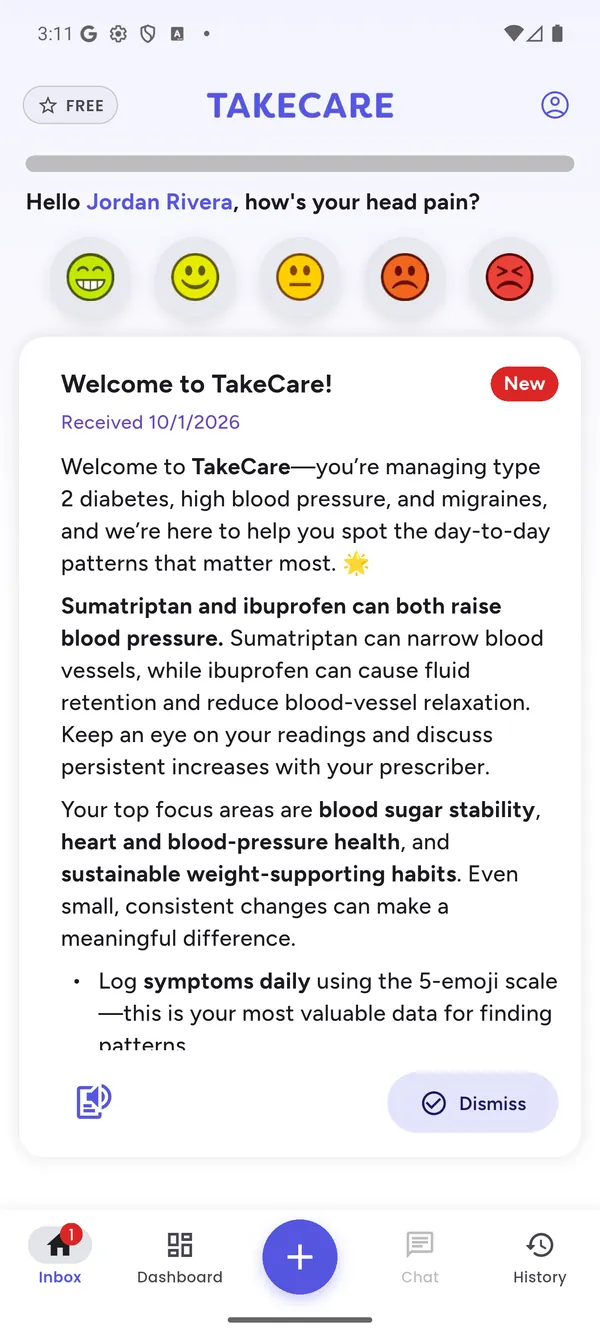
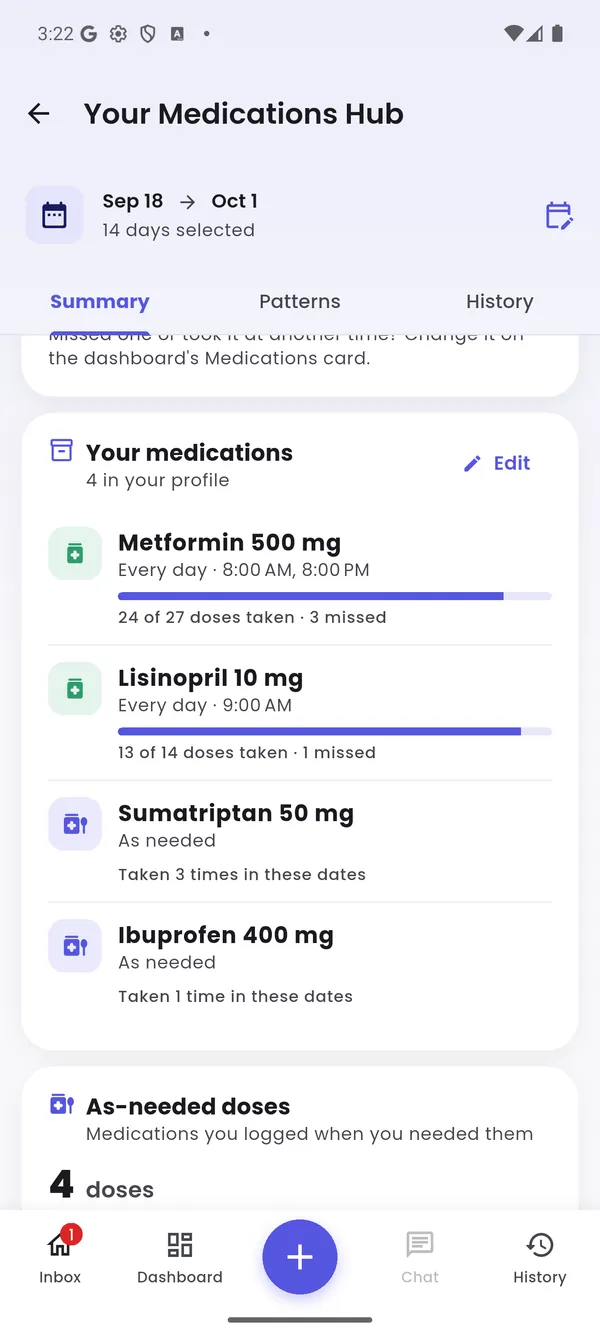
The welcome check for a demo profile, and the Medications hub.
For a demo profile living with type 2 diabetes, high blood pressure and migraines, the check pointed out that sumatriptan (for migraines) and ibuprofen can both raise blood pressure, which matters because high blood pressure is also being treated. That's exactly the kind of thing worth raising at the next appointment.
TakeCare points out things worth discussing with your doctor or pharmacist. It never tells you to start, stop or change a medication.
Every meal checked against your medications (Pro)
With TakeCare Pro, each meal you log is rated against your conditions, medications and allergies, with a healthier swap when there's a better option. If you log grapefruit juice while taking a medication that interacts with it, or a meal that's high in sodium while you're managing your blood pressure, you'll know.
A dose-by-dose record
Turn on reminders, tap "taken" for each dose, and log as-needed medicines when you take them. The Medications hub then shows how consistently you take each one, which times of day tend to slip, whether you feel different on days you miss a dose, whether an as-needed medicine helps within a few hours, and how you felt before and after starting something new.
Questions, answered with your own data (Pro)
Ask Carey things like "Could any of my medications be affecting my sleep?" or "What should I ask my doctor about my new prescription?" Carey knows your medications, conditions and allergies, and what you've logged, so the answers are about you. Treat them as a starting point for a conversation with your care team, not a replacement for it.
The bottom line
The more conditions and medications you manage, the more likely something doesn't quite fit together, and the less likely any one doctor sees the whole list. Keep one complete list, share it with everyone who prescribes for you, and keep track of how you feel when anything changes. TakeCare can do the checking and the record-keeping, so your appointments can focus on the decisions.