
Calories get most of the attention, but for many chronic conditions, the numbers that matter most are smaller and easier to miss: the sodium in your soup, the sugar in your coffee drink, the saturated fat in your lunch. They add up quietly over a day, and for conditions like high blood pressure, diabetes, heart disease and kidney disease, they can matter as much as the total.
Here's what the daily limits are, where these nutrients hide, and how to keep an eye on them without turning every meal into a math problem.
The daily limits at a glance
These are the Daily Values used on U.S. Nutrition Facts labels, based on a 2,000-calorie diet. They're the general limits TakeCare compares your day against.
| Nutrient | Daily limit | Why it matters most for |
|---|---|---|
| Sodium | 2,300 mg max | High blood pressure, heart failure, kidney disease |
| Sugar | 50 g max | Diabetes and prediabetes, weight, heart health |
| Saturated fat | 20 g max | High cholesterol, heart disease |
| Cholesterol | 300 mg max | High cholesterol, heart disease |
| Fiber | 25 g or more (a goal, not a limit) | Digestion, blood sugar, cholesterol |
Sodium: the one most people go over
According to the CDC, most Americans eat far more sodium than the recommended limit, and most of it doesn't come from the salt shaker. It comes from packaged and restaurant food, often in things that don't taste especially salty:
- Bread and rolls
- Deli meats, bacon and sausages
- Pizza and sandwiches
- Canned and instant soups
- Sauces, dressings and seasoning mixes
- Restaurant and takeout meals of almost every kind
A single restaurant meal can easily pass 2,000 mg on its own. That's why sodium is worth tracking meal by meal, not just guessing at the end of the day.
Sugar: watch the drinks first
Sweetened drinks, like soda, sweet tea, energy drinks, specialty coffees and many juices, are among the biggest sources of added sugar, and they're easy to overlook because they don't fill you up. One 20-oz soda can be over 60 g of sugar, more than the whole day's limit.
The label's 50 g limit is for added sugars. Natural sugars in whole fruit and plain milk come with fiber, protein and nutrients, so they're less of a concern. When TakeCare analyzes a meal, its sugar figure includes all sugars, so treat it as a guide and look at where the sugar is coming from.
Saturated fat and cholesterol
Saturated fat is mostly found in fatty and processed meats, butter, cheese, cream, and many baked goods and fried foods. Swapping some of it for unsaturated fats, like olive oil, nuts, seeds, avocado and fish, is one of the most consistent pieces of advice for heart health.
Dietary cholesterol comes mainly from eggs, meat, shellfish and full-fat dairy. For most people, saturated fat has a bigger effect on blood cholesterol than the cholesterol in food, but both are worth keeping in view if you're managing high cholesterol or heart disease.
Reading a label in five seconds
Look at the % Daily Value column. As a quick rule from the FDA:
- 5% DV or less is low
- 20% DV or more is high
You want sodium, added sugars and saturated fat on the low side, and fiber on the high side. And check the serving size: if you eat twice the serving, you get twice the numbers.
How TakeCare keeps track for you
Every meal you log, whether you type it, say it, scan a barcode or snap a photo (Pro), is analyzed for calories, protein, carbs, fat, saturated fat, sugar, fiber, sodium, cholesterol and caffeine. You don't need to add anything up.
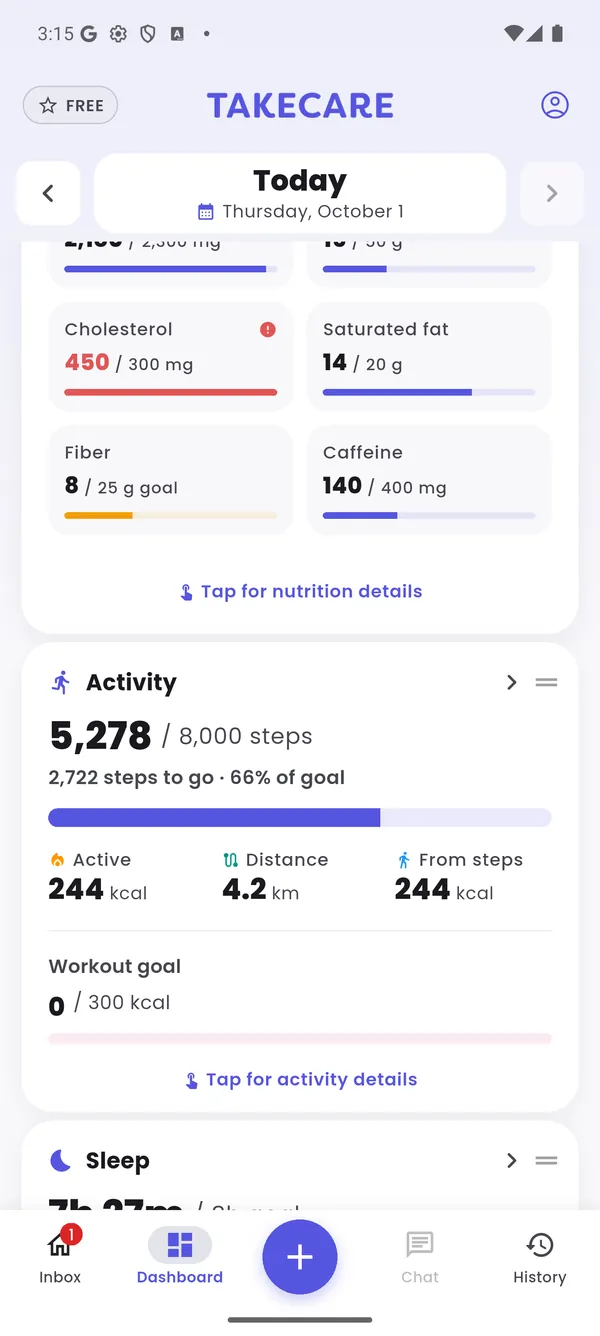
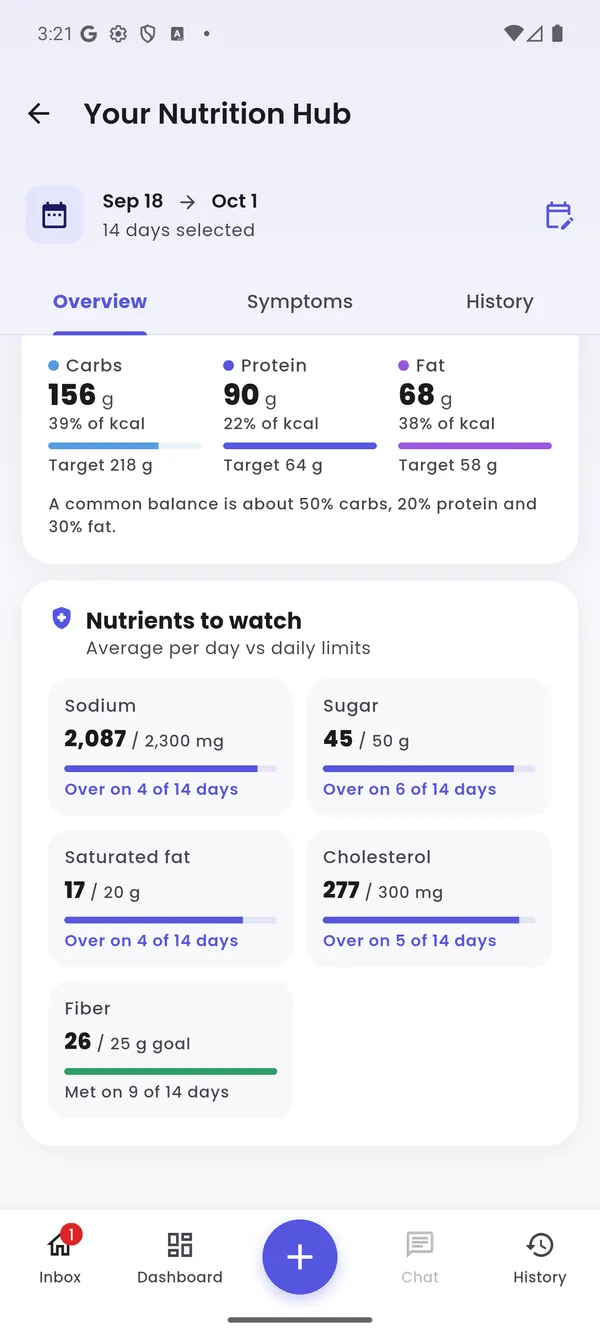
Today's numbers on the dashboard, and your averages against the limits in the Nutrition hub.
- On your dashboard: today's sodium, sugar, saturated fat and cholesterol against their limits, so you can see where you stand before dinner.
- In the Nutrition hub: your average per day for each nutrient, and how many days you went over, for any dates you choose.
- Alongside your symptoms: which foods line up with your better and worse days.
- With Pro: every meal rated against your conditions, medications and allergies, with a healthier swap. A salty lunch gets flagged if you're managing your blood pressure.
The bottom line
You don't need to count every milligram. But knowing roughly where your sodium, sugar and saturated fat land each day, and which meals push them over, is one of the most useful things you can do for many chronic conditions. Let TakeCare do the counting, and spend your energy on the swaps that matter.